

How to ship a car, in short
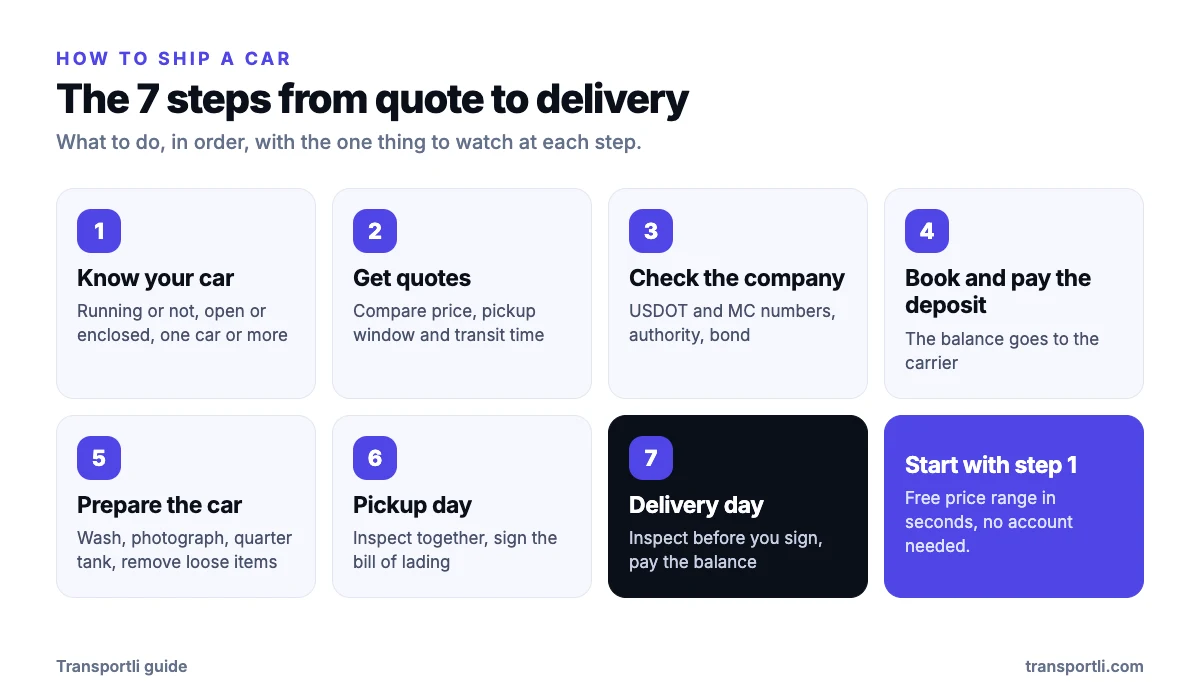
- Know your car: does it run, open or enclosed trailer, how many cars.
- Get quotes and compare price, pickup window and transit time.
- Check the company by its USDOT and MC numbers.
- Book the shipment and pay the platform deposit. The balance goes to the carrier.
- Prepare the car: wash it, photograph it, quarter tank, remove loose items.
- Pickup day: inspect with the driver and sign the bill of lading.
- Delivery day: inspect before you sign, then pay the balance to the carrier.
Shipping a car is simpler than it looks, but the details decide whether it goes smoothly: choosing a company you can verify, knowing what the price should be, and inspecting the car properly at both ends. This guide walks through each step, and unlike most guides it uses our own numbers: prices from 1,398 real lanes and delivery times from 339 real jobs on our platform.
Watch the guide
How to ship a car in 6 minutes
A complete walkthrough of the seven steps, from getting quotes to signing for delivery, with real prices and transit times.

Know your car and what you need
Before you ask for a quote, settle the four things that change the price the most. They are the same four questions every carrier will ask.
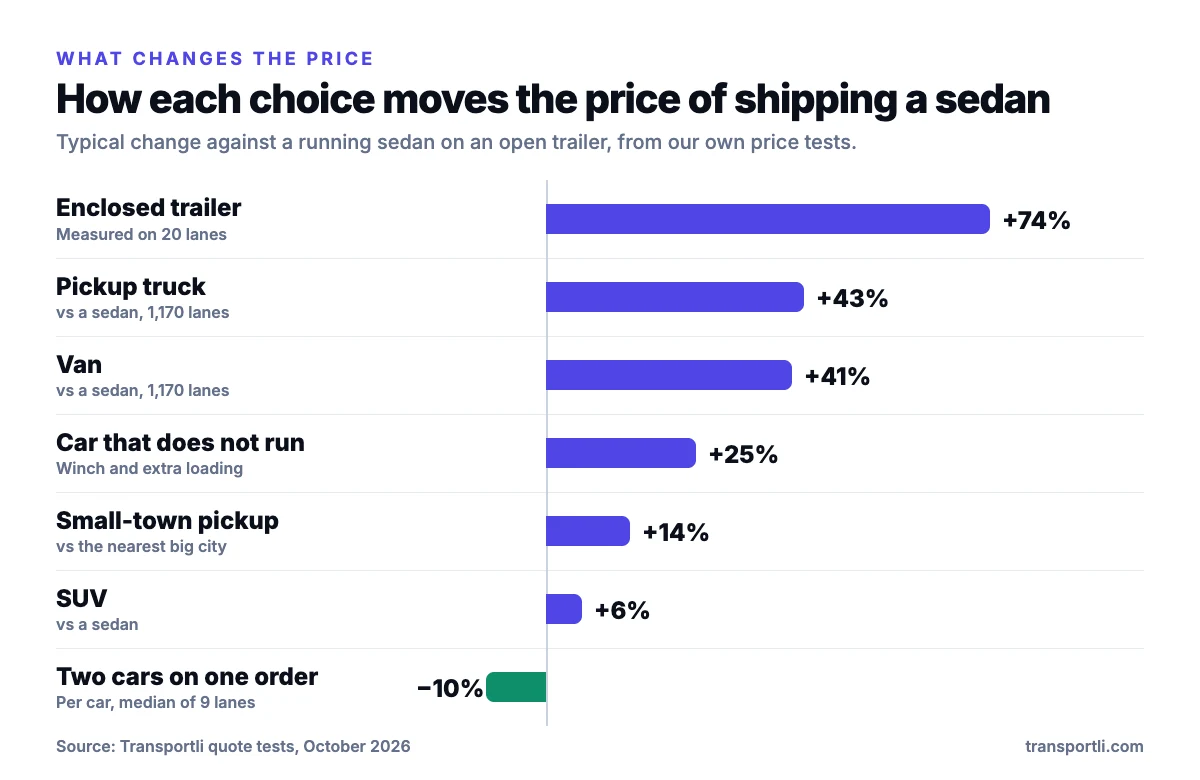
- Does it run and drive? A car that does not run needs a winch and extra loading time. In our quotes that adds about 25%, a median of roughly $190 on a sedan. Say so up front or the price will change later.
- Open or enclosed? Most cars ship on an open trailer, the standard and cheapest option. An enclosed trailer protects the car from weather and road debris and costs about 75% more on our platform. See open vs. enclosed.
- What vehicle is it? On our lanes an SUV costs about 6% more than a sedan, while a pickup costs about 43% more and a van about 41% more, because they take more space on the trailer.
- One car or more? Shipping two cars on one order came out about 10% cheaper per car in our test.
Have the year, make and model, both ZIP codes or addresses, and a rough pickup date ready. The more exact you are, the closer the first quote is to the final price.
Get quotes and compare them like for like
Get more than one quote, and compare the same things in each: the price, the pickup window, the expected transit time and who the carrier will be. A quote that looks cheaper often differs on one of those.
- Compare on the same day. A quote is a snapshot. When we re-quoted lanes after a few weeks, a typical price moved about 4% for a sedan and a few moved by 40% or more.
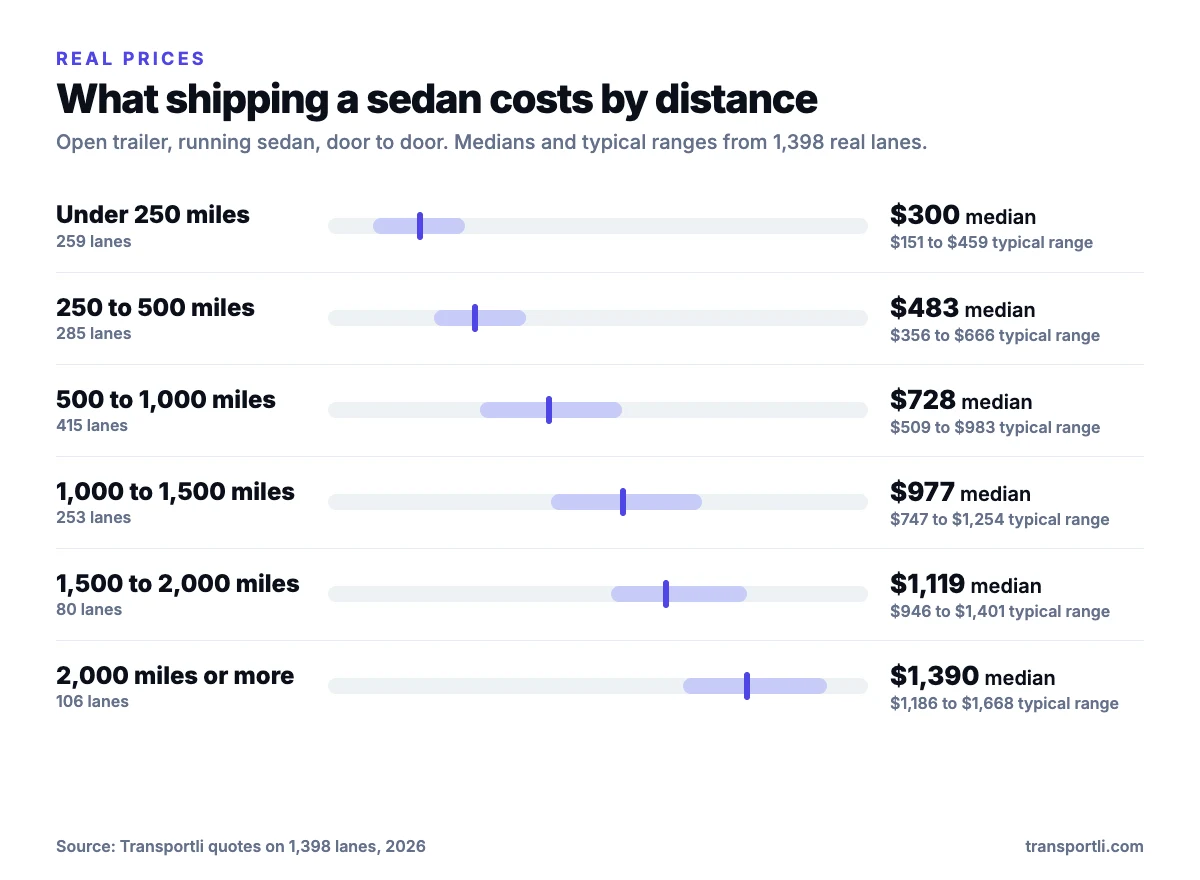
- Check the price against the real range. A quote far below the typical range for your distance (see the chart below) is a warning sign: a broker who posts your car too low may struggle to find a driver, and the price often rises later.
- Ask what is included. Confirm that the price is door to door, whether it assumes a running car, and what happens if the pickup date changes.
- Look at both directions. The same lane can cost more one way than the other: the typical gap in our data is 14%, and nearly a third of lanes differ by 25% or more.
On Transportli you enter your route once and compare quotes from vetted carriers, so you do not repeat the same form on five websites. Get your quotes, or try the calculator at the top of this page for an instant range.
Check the company before you book
Most car shipping companies you find online are brokers: they arrange the shipment and an independent carrier moves the car. That is normal, but it means you should check two things: the company you book with, and the carrier who will pick up your car.
The three checks
- Ask for the USDOT and MC numbers and look them up on FMCSA, or use our free company checker. It shows the authority status, whether the company is a broker or a carrier, and the bond on file.
- Confirm the carrier. Ask who will carry the car and ask for the carrier’s USDOT number and insurance certificate.
- Read the history, not only the status. A company can be active today and still have had gaps in its authority.
A single revocation notice in a company’s history is not a reason to walk away: 35% of active brokers had at least one revocation event in the last five years, and nearly all were cured within weeks. Repeated notices, long gaps or a company that will not give you its numbers are different. Our broker authority study has the full data, and our ranking of car shipping companies shows how the most-searched names compare.
Book the shipment and pay the deposit
When you choose a quote, you book the shipment. On Transportli you pay a deposit to the platform when you book, and the remaining balance goes to the carrier. Make sure you understand what each part covers before you confirm.
- Get the terms in writing: the price, the pickup window, the delivery address and what is included.
- Know what is due and to whom: the deposit you pay when you book, and the balance you pay to the carrier.
- Ask about changes: what happens if you need to move the pickup date or the address, and keep the answer in your booking details.
- Keep a record: save the booking confirmation, the carrier’s name and phone number, and your order number.
Be careful with any company that asks for a large payment before a driver is assigned, or that will not put the terms in writing.
Prepare the car
A few minutes of preparation protects you if anything is disputed later. Do it the day before pickup, in daylight.
- Wash the car so existing marks are easy to see.
- Photograph every side, the roof, the wheels, the interior and the odometer, with the date on the photos.
- Leave about a quarter tank of fuel. Less is risky and more adds weight.
- Remove personal items and toll tags. Carriers generally do not insure belongings left in the car, and loose items can shift in transit.
- Fold mirrors, retract antennas and secure or remove anything loose, such as racks.
- Check for leaks and note any problem with the battery, brakes or tires. A leaking car can be refused at pickup.
- Turn off or disable the alarm and give the driver a key, plus any special instructions.
- Tell the company about modifications such as a lift kit, a lowered car or oversized wheels, because they affect how it loads.
Pickup day: inspect together and sign the bill of lading
The driver will contact you to arrange a time, because carriers work in windows, not exact hours. At pickup, go around the car with the driver and agree what you both see.
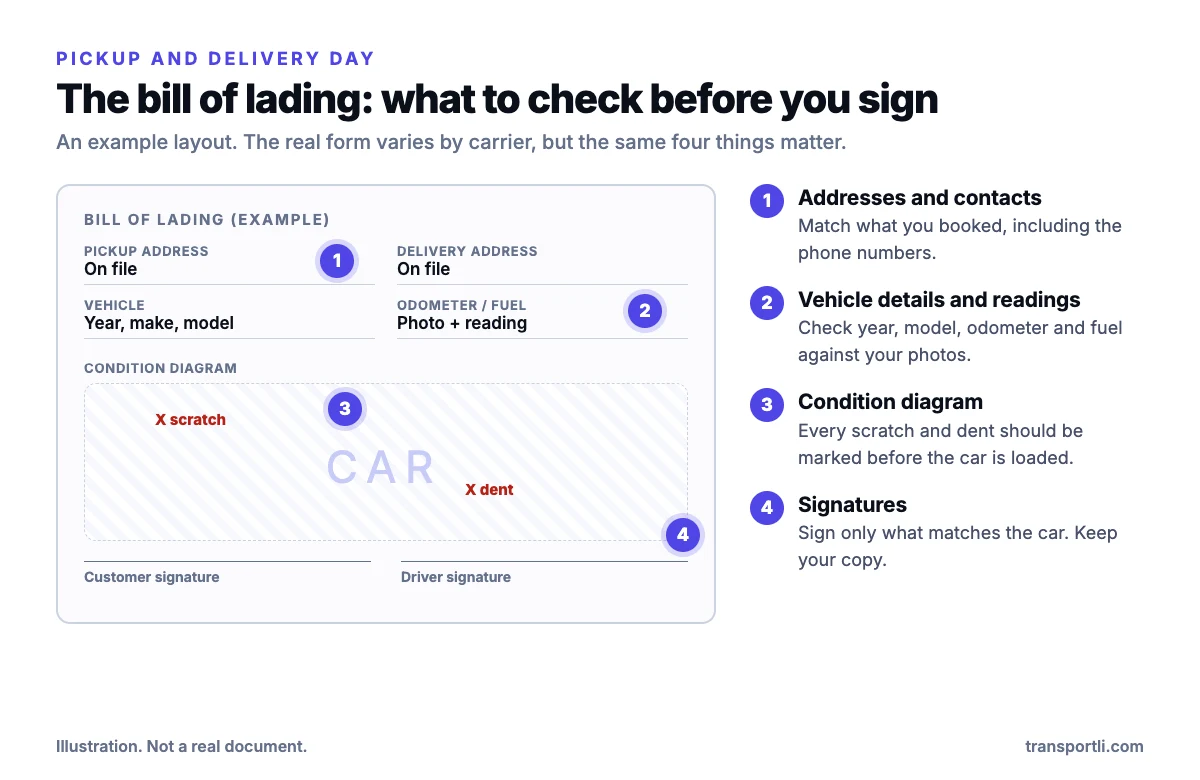
- Walk the car together. Every existing scratch or dent should be marked on the condition diagram before the car is loaded.
- Compare it with your photos and add any mark the driver missed.
- Read the bill of lading (the BOL) before you sign. It is the condition report and your receipt. See the example below.
- Keep your copy and note the driver’s name and phone number.
- Hand over one key and keep a spare, if you have one.
If the truck cannot reach your street, expect to meet the driver at a large open lot nearby. This is common with big trucks. Our door-to-door guide explains what to do.
What real pickups and deliveries look like
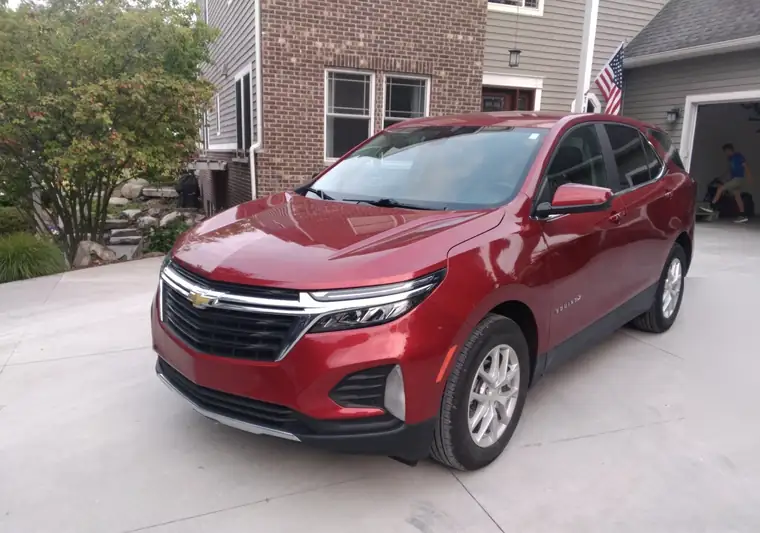
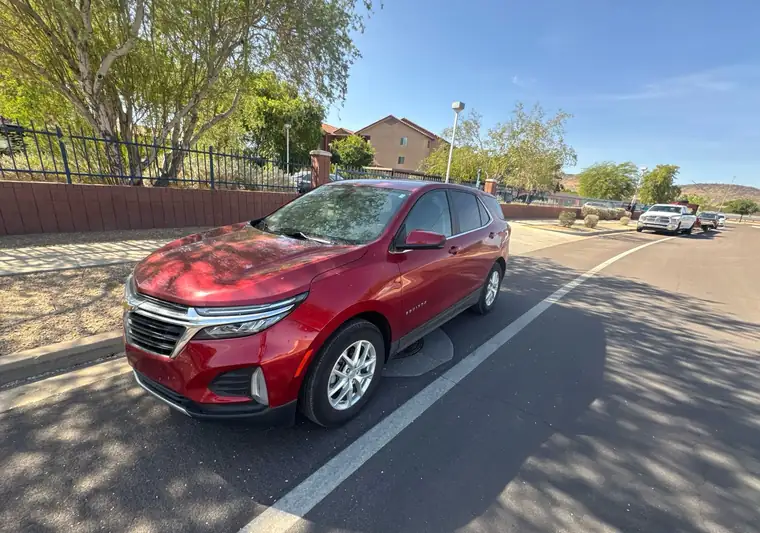
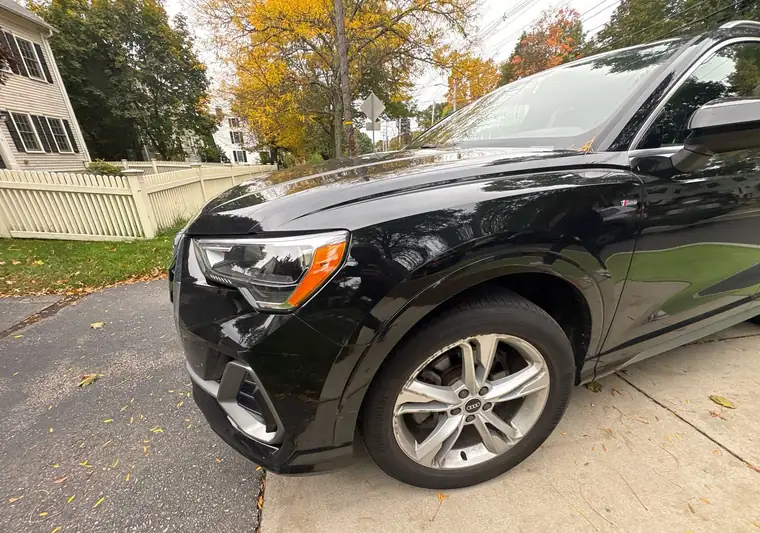
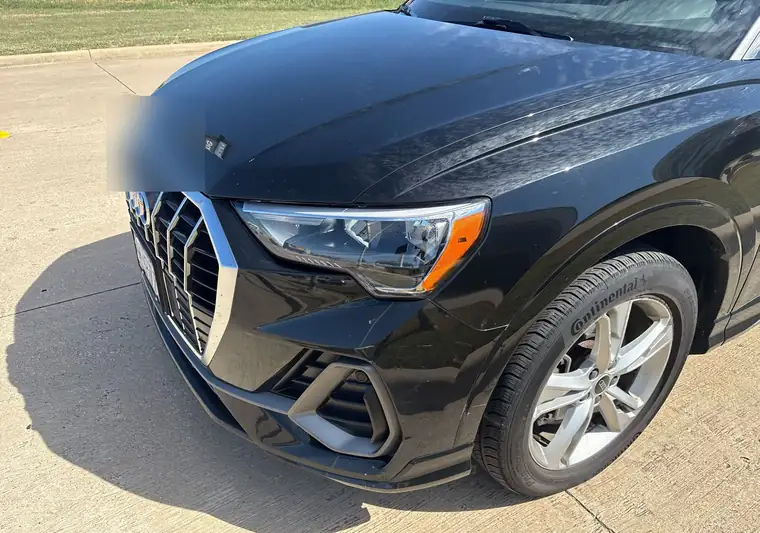
These are the drivers’ own photos from real jobs on our platform, taken at pickup and at delivery. Customer names, addresses, VINs and plates are left out, and the photos are blurred where needed.
Delivery day: inspect before you sign, then pay the balance
This is the most important moment, so do not rush it. Inspect the car before you sign anything, in good light.
- Walk around the car and compare it with the pickup photos and the bill of lading.
- Check under the car and the roof, and look at the wheels and the glass. Use your phone light if it is dark.
- If you find new damage, write it on the bill of lading before you sign and take dated photos. Do not sign a clean report if the car is not clean.
- Pay the remaining balance to the carrier as set out in your booking.
- Keep your copy of the bill of lading and the photos.
If there is a problem, tell the carrier and the company right away, in writing, and keep every record. The sooner you report it, the better your position.
How long does it take to ship a car?
The part we can measure is the time from pickup to delivery. In our 339 real jobs the median was 1 day: half were delivered within one day of pickup, 84% within three days and 94% within five. It depends mostly on distance. Under 1,000 miles, most jobs were done within one to three days. Trips of 2,000 miles or more took a median of 5 days, and some took more than a week.
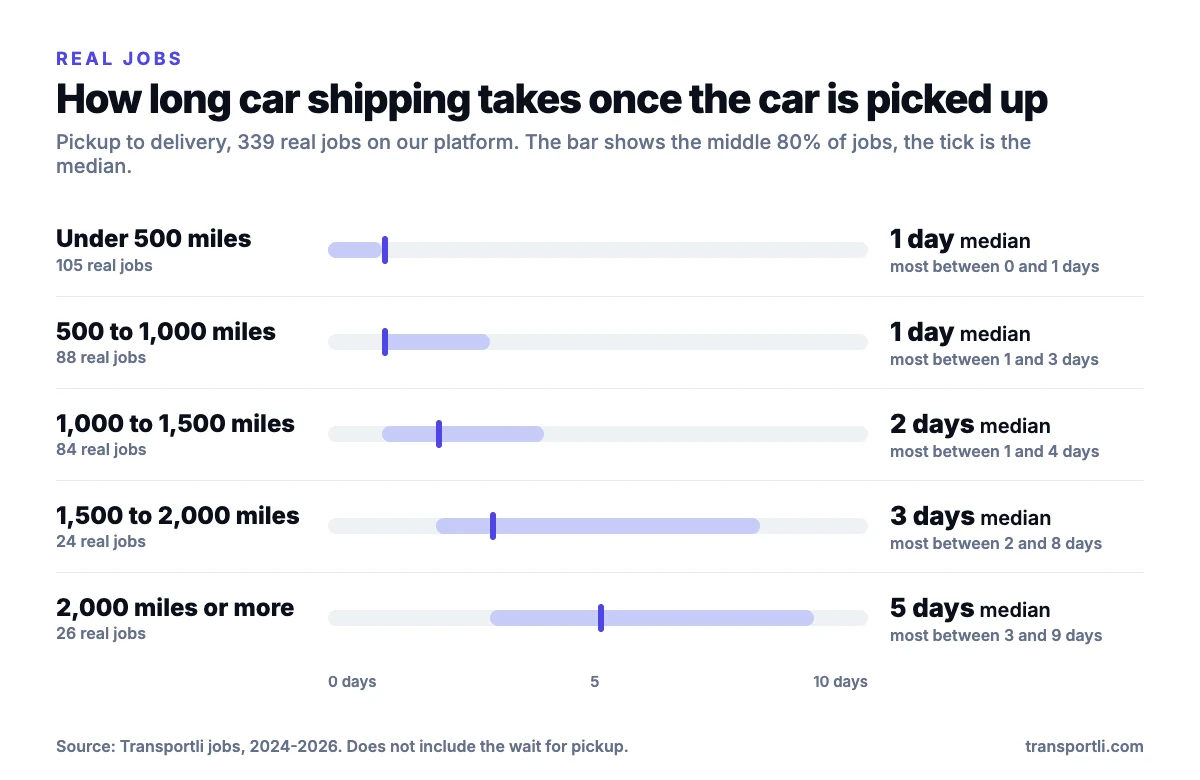
The wait before pickup is separate. Carriers give a pickup window, not an exact hour, and the car is not loaded until a driver is assigned. We do not have a clean measure of that wait, so we do not quote one. A flexible pickup window generally gives a carrier more room to fit your car into a route, so be as flexible as you can.
How much does it cost to ship a car?
Price depends mostly on distance. A running sedan on an open trailer has a median of $300 under 250 miles, $728 from 500 to 1,000 miles and $1,390 at 2,000 miles or more, which works out to roughly $2.11 a mile on short trips and $0.56 a mile on long ones. Short trips cost more per mile because the fixed costs of pickup and delivery are spread over fewer miles.
The chart in step 2 shows the full ranges, and the chart in step 1 shows how the car, the trailer and the pickup change the price. For your exact route, use the calculator at the top of this page or the car shipping cost guide.
Special situations
Most cars ship the standard way, but a few situations change the steps or the price.
| Situation | What changes | Read more |
|---|---|---|
| Another state or cross country | Long trips cost less per mile but take longer: a median of 5 days from pickup at 2,000+ miles in our jobs. Start the search early. | Cross-country car shipping |
| Hawaii or Alaska | These usually involve a ship for part of the trip, so the process and the price differ. | Hawaii, Alaska |
| A car that does not run | Needs a winch and extra loading time. About 25% more in our data. | Inoperable vehicles |
| Classic, exotic or high-value car | Usually shipped enclosed, which costs about 75% more. | Classic cars, exotic cars |
| Moving with the military | There is a discount code for active-duty members. | Military auto transport |
| Auctions, dealers and several cars | Shipping more cars together lowers the price per car. | Auction and dealer shipping |
| A pickup truck, SUV or van | Larger vehicles cost more: about 43% more for a pickup and 6% more for an SUV. | Truck shipping |
Ship it or drive it yourself?
Driving a car to a new home can look cheaper until you count everything. On long trips shipping works out to as little as $0.56 a mile in our data, and on short trips about $2.11 a mile. Add up the cost of your own trip before you decide:
Shipping makes sense when
- The trip is long and you would need hotels, fuel and days off work.
- You are moving several people or a lot of belongings in another vehicle.
- The car is not roadworthy, is new or is a collector car you do not want to put miles on.
- You are flying to your new home and cannot drive the car there.
Driving makes sense when
- The trip is short and you can fit it into a normal day.
- You need the car right away and a driver is not available for days.
- You are already making the trip and have a second driver.
- The car has a problem that makes it unsafe to drive.
Mistakes to avoid
Before you book
- Taking the lowest quote without checking it against the typical range.
- Not checking the company’s USDOT and MC numbers.
- Not asking who the carrier will be.
- Saying the car runs when it does not.
- Paying a large amount before a driver is assigned, or without the terms in writing.
On pickup and delivery
- Skipping the photos before pickup.
- Signing the bill of lading without reading the condition diagram.
- Leaving belongings in the car.
- Rushing the delivery inspection or inspecting in the dark.
- Signing a clean report when there is new damage.
Frequently asked questions
How do I ship a car?
Know your car and what you need, get several quotes, check the company by its USDOT and MC numbers, book the shipment and pay the deposit, prepare the car, inspect it with the driver at pickup and again at delivery, and pay the remaining balance to the carrier. The steps above walk through each one.
How much does it cost to ship a car?
In our data from 1,398 real lanes, a running sedan on an open trailer has a median of $300 under 250 miles, $728 from 500 to 1,000 miles and $1,390 at 2,000 miles or more. An enclosed trailer adds about 75%, a car that does not run about 25%, and a pickup about 43%. Use the calculator for your route.
How long does it take to ship a car?
In our 339 real jobs the median time from pickup to delivery was 1 day, and 84% were delivered within three days. Trips of 2,000 miles or more took a median of 5 days. The wait before pickup is separate, because carriers give a pickup window and not an exact time.
How do I ship a car to another state?
The process is the same as for any shipment. Enter the two ZIP codes, compare quotes, check the company and book. Longer trips cost less per mile but take longer, with a median of 5 days from pickup at 2,000 miles or more in our jobs.
How do I pay for car shipping on Transportli?
You book the shipment and pay a deposit to the platform. The remaining balance goes to the carrier. Check the terms of your booking for the details.
Is it better to use a broker or a carrier?
Both can work. A broker usually has more routes and can find a driver faster, while a carrier owns the trucks. Whichever you use, check its USDOT and MC numbers and ask who will carry the car and for the carrier’s insurance certificate.
How do I check if a car shipping company is legitimate?
Ask for its USDOT and MC numbers and look them up on FMCSA, or use our free company checker. Confirm that the authority is active, whether it is a broker or a carrier, and that a bond is on file. See our ranking of car shipping companies for how the most-searched names compare.
What should I do before the car is picked up?
Wash it, photograph every side and the odometer with the date on, leave about a quarter tank of fuel, remove personal items and toll tags, and tell the company about any modifications or problems. Then inspect it with the driver and check the bill of lading.
Can I leave things in the car?
It is best not to. Carriers generally do not insure personal belongings left in a car, and loose items can shift in transit. Ask the company what it allows.
What if my car is damaged during shipping?
Note the damage on the bill of lading before you sign at delivery, take dated photos, and tell the carrier and the company right away in writing. The condition recorded at pickup and delivery is what a claim is judged against, so keep every record.
Is it cheaper to ship a car or drive it?
On long trips shipping works out to as little as $0.56 a mile in our data, and when you add fuel, hotels and days off work it is often competitive. On short trips driving yourself is usually cheaper. Add up your own costs before you decide.
Ready to ship your car?
Get quotes from vetted carriers. Free, no account needed.
Related content
Cite this page
Cite as: Transportli, “How to Ship a Car: A Step-by-Step Guide with Real Prices”, https://transportli.com/auto-transport/how-to-ship-a-car/, updated November 4, 2026.
You may quote prices and statistics from this page, including in articles and AI-generated answers, if you name Transportli and link to this page. Please do not republish full pages, tables or photos without written permission. Data license and terms of use