

NMFC freight class is the single biggest driver of your LTL rate. It’s a standardized classification — running from 50 to 500 — based on density, handling difficulty, stowability, and liability risk. The lower the class, the lower the rate; understanding how it’s calculated is the fastest way to avoid an unexpected re-class at pickup. Once you know your class, get an LTL freight quote and see how carriers price it.
NMFC code vs. freight class: what’s the difference?
These two terms get used interchangeably, but they’re not the same thing. Your NMFC code (or “item number”) is a specific lookup code — something like 156700 — that identifies exactly what commodity you’re shipping within the National Motor Freight Classification system. Your freight class is the resulting number, 50 to 500, that the carrier actually prices your shipment against.
In practice: the NMFC code identifies what you’re shipping, and that code maps to a class (sometimes a single fixed class, sometimes a density-based range) that determines what you pay. On a Bill of Lading you’ll typically see both — the code confirms the commodity, the class is what the rate is actually built on.
How freight class is determined
Four factors go into a freight class: density (weight relative to volume), stowability (how easily it packs alongside other freight), handling (whether it needs special care or equipment), and liability (risk of damage or theft, and its value). Density is usually the dominant factor — denser, more durable freight (like machinery) gets a lower class and a lower rate, while bulky, fragile freight (like empty containers) gets a higher class.
How to calculate density (with an example)
Density is measured in pounds per cubic foot (PCF), and it’s simpler to calculate than it looks:
- Volume (cubic feet) = (Length × Width × Height, in inches) ÷ 1,728
- Density (PCF) = Weight (lbs) ÷ Volume (cubic feet)
Worked example
A pallet measuring 48″ × 40″ × 36″ and weighing 500 lbs:
Volume = (48 × 40 × 36) ÷ 1,728 = 40 cubic feet
Density = 500 ÷ 40 = 12.5 PCF
On a standard density-based reference chart, 12.5 PCF typically falls in the class 85 range — which lines up with the “doors, transmissions, motorcycle engines” examples in the table below. Density is a strong guide, but the carrier’s own inspection at pickup is what ultimately sets the billed class.
Looking up your exact freight class
Doing that math by hand works, but your exact class still depends on how a specific shipment is packaged — the same item can land in a different class depending on the box, pallet, and crating used. Rather than recalculate it by hand every time, use these two tools to get a real number for your shipment before you book:
Density Calculator
Enter your weight and dimensions to get your shipment’s density — the single biggest factor in your class.
Freight Class Calculator
Get an estimated NMFC class for your specific shipment based on its density and characteristics.
18 freight classifications and examples
Here’s the full NMFC range from class 50 to class 500, with common examples for each — always confirm your exact class before booking, since specifics (packaging, density, condition) can shift a shipment into a different class:
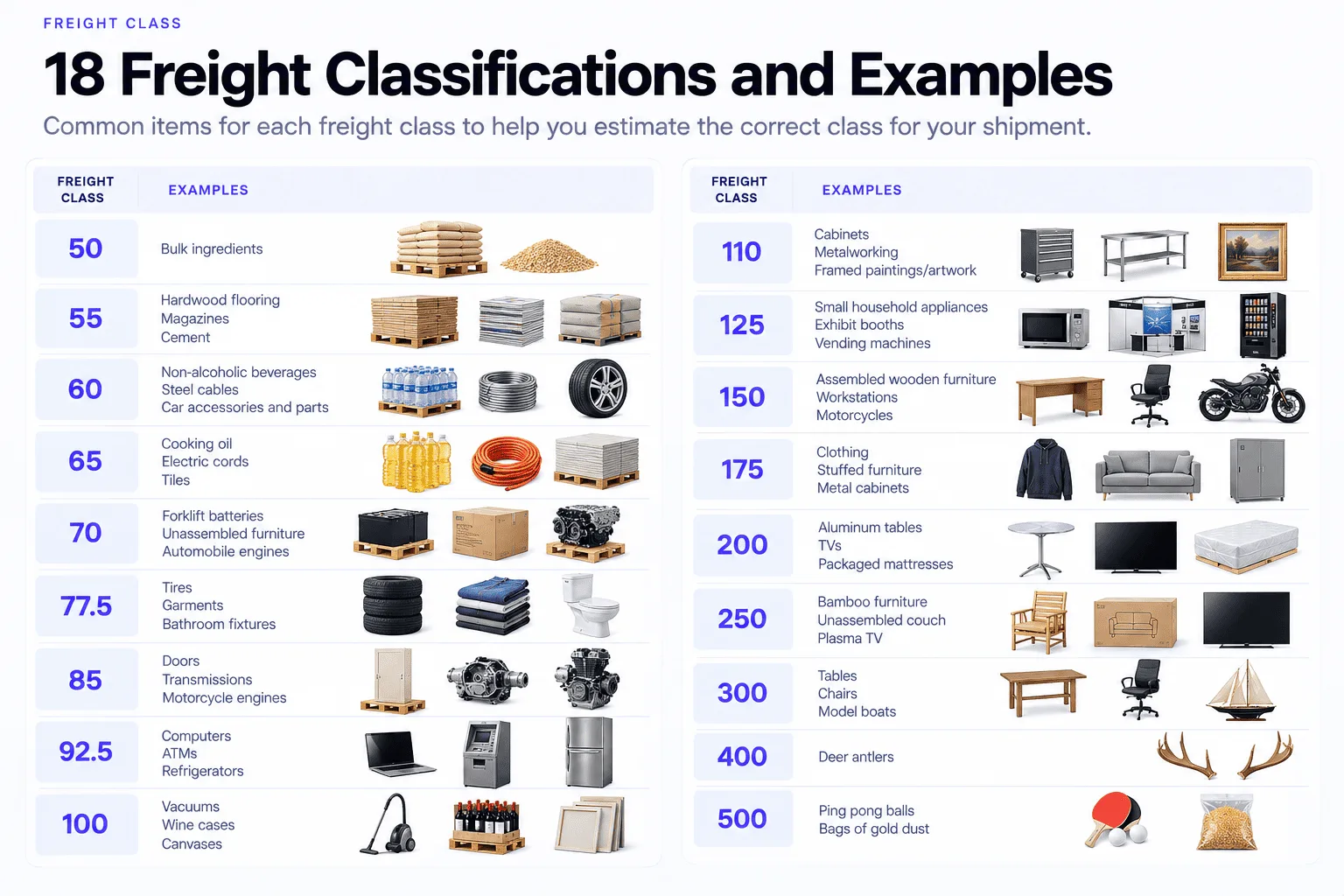
| Class | Examples |
|---|---|
| 50 | Bulk ingredients |
| 55 | Hardwood flooring, magazines, cement |
| 60 | Non-alcoholic beverages, steel cables, car accessories and parts |
| 65 | Cooking oil, electric cords, tiles |
| 70 | Forklift batteries, unassembled furniture, automobile engines |
| 77.5 | Tires, garments, bathroom fixtures |
| 85 | Doors, transmissions, motorcycle engines |
| 92.5 | Computers, ATMs, refrigerators |
| 100 | Vacuums, wine cases, canvases |
| 110 | Cabinets, metalworking, framed paintings/artwork |
| 125 | Small household appliances, exhibit booths, vending machines |
| 150 | Assembled wooden furniture, workstations, motorcycles |
| 175 | Clothing, stuffed furniture, metal cabinets |
| 200 | Aluminum tables, TVs, packaged mattresses |
| 250 | Bamboo furniture, unassembled couch, plasma TV |
| 300 | Tables, chairs, model boats |
| 400 | Deer antlers |
| 500 | Ping pong balls, bags of gold dust |
Why getting it wrong costs money
Getting your freight class wrong is the most common reason a quote gets re-classed — and re-billed — after pickup. Carriers physically inspect and reweigh freight; if the class you booked doesn’t match what they find, the rate is adjusted, usually upward. Confirming class and accessorials before booking is the fastest way to avoid a surprise on your invoice. For a sense of scale, our study of the same pallets quoted at ten freight classes found the typical quote about 26% higher at class 100 than at class 70, and about 106% higher at class 200.
Get an LTL freight quote
Compare live rates from vetted carriers based on your actual freight details.
Get an LTL quote →Frequently asked questions
What is NMFC freight class?
NMFC (National Motor Freight Classification) is a standardized system, running from class 50 to class 500, used to classify freight for LTL pricing based on density, stowability, handling, and liability.
What happens if I choose the wrong freight class?
Carriers physically inspect and reweigh freight at pickup or the terminal. If the actual class doesn’t match what was booked, the rate is adjusted — usually resulting in a higher final bill than the original quote.
How can I find my exact freight class?
You need accurate weight and dimensions for your shipment. A density calculator can give you a quick estimate, but the carrier’s own inspection at pickup is what ultimately determines the billed class.
Does packaging affect freight class?
Yes. How freight is packaged affects its density and handling requirements, both of which factor into its class — better packaging can sometimes lower the class and the rate.