

Trade show freight is different from ordinary freight because the date cannot move. The show opens whether or not your pallets are there. This guide explains how to ship to a trade show, from advance warehouse vs direct-to-show delivery to when to choose LTL, a Sprinter van or a box truck, how far ahead to ship, why dock appointments matter, what to do when something goes wrong and a printable checklist. It draws on trade show freight we move every season, including real jobs with their bills of lading and photos. To price your own shipment, get a freight quote.
How trade show freight works
Almost every show has an official show contractor that handles freight on the show floor, plus the venue’s own receiving rules. The details are in the exhibitor kit or service manual for your show, so read it before you book anything. The terms below are common, but dates, fees and addresses differ by show, so always confirm them against your kit.
| Term | What it means |
|---|---|
| Advance warehouse | You ship early to a warehouse the show contractor runs. The contractor stores your freight and delivers it to your booth for a handling fee. It usually has a receiving window of a few weeks before the show. |
| Direct to show | You ship straight to the venue for a specific date and dock, usually a target date or time window assigned by the contractor. It is cheaper if it works, but a missed window can mean waiting in line or extra charges. |
| Material handling (drayage) | The show contractor’s charge for moving your freight from the dock to your booth and back. It is usually priced by weight with a minimum, and it is separate from the cost of the truck. |
| Dock appointment | A booked time slot to unload at the venue or warehouse dock. Without it your driver may have nowhere to unload. |
| Outbound | The return trip after the show. The paperwork and carrier for it should be arranged before you leave home. |
Which route fits depends on your freight and your schedule. Advance warehouse is the safest for a big or fragile booth, because the freight is already in the building and not racing the clock. Direct to show is cheaper and faster when you have a driver, a confirmed appointment and a small load.
LTL, Sprinter van or box truck: which to use for a trade show
| LTL freight | Cargo or Sprinter van | Box truck | |
|---|---|---|---|
| Best for | Pallets and crates with a flexible schedule and a tight budget | A few pallets or crates on a hard deadline, door to door | A large booth or many pallets in one dedicated trip |
| Typical size | About 150 to 10,000 lb, one to six pallets | About 3 to 4 pallets and up to about 3,000 lb | Commonly about 10 or more pallets, depending on the truck |
| How it moves | Shared trailer, through terminals | Dedicated van, drives straight through | Dedicated truck, drives straight through |
| Speed | Slowest and least predictable | Fastest to dispatch, direct | Direct, but slower to dispatch than a van |
| Cost | Lowest for small loads | Higher, from about $183 for a short trip | Highest of the three for small loads, best per pallet for large ones |
| Watch out for | Transit window, liftgate and appointment fees, terminal handling | Weight limit and door size on tall crates | Dock and parking space at the venue, liftgate or dock height |
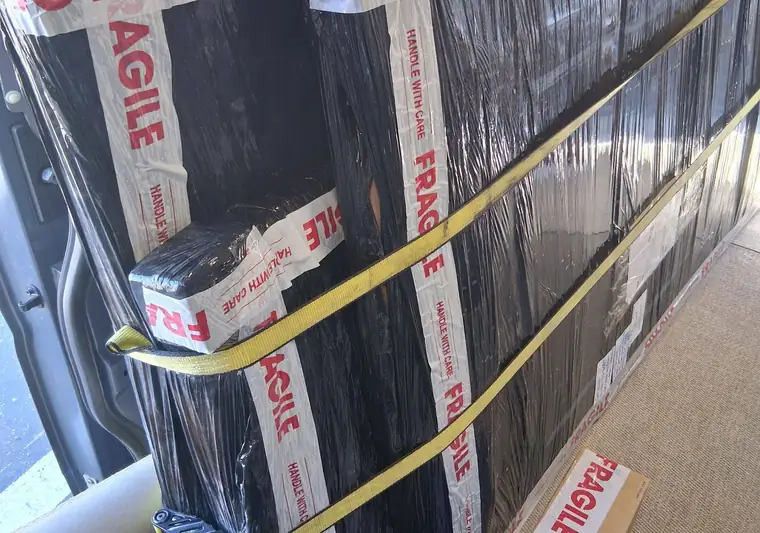
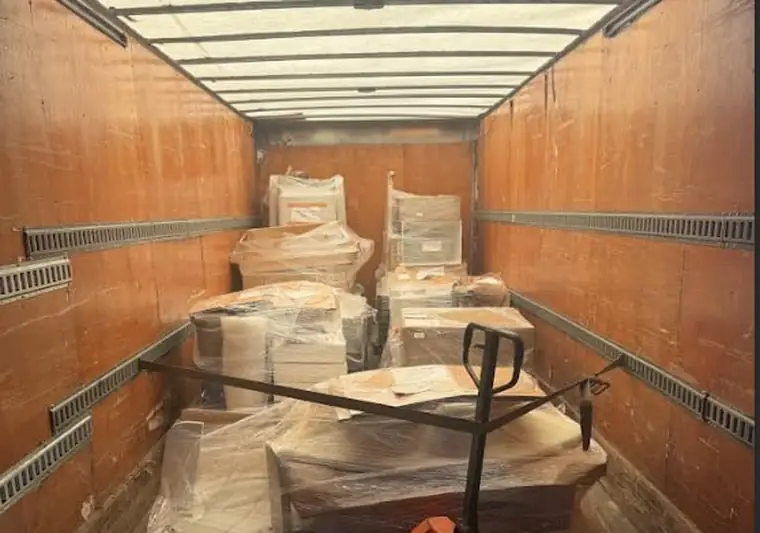
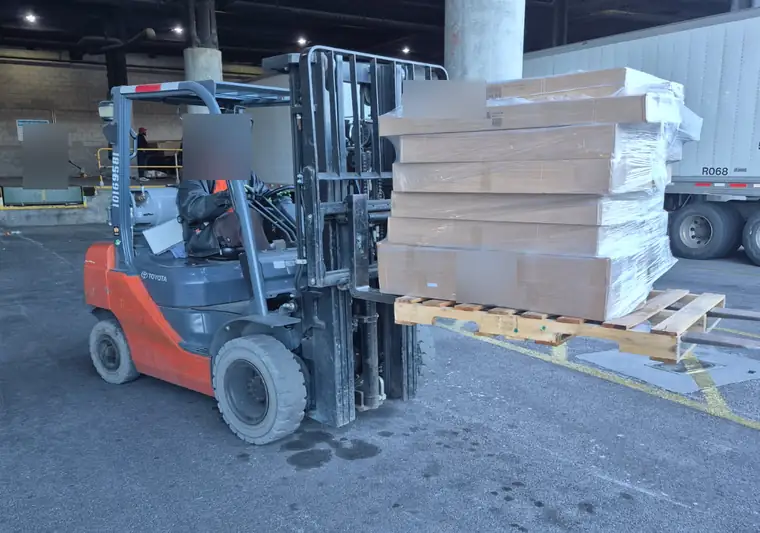
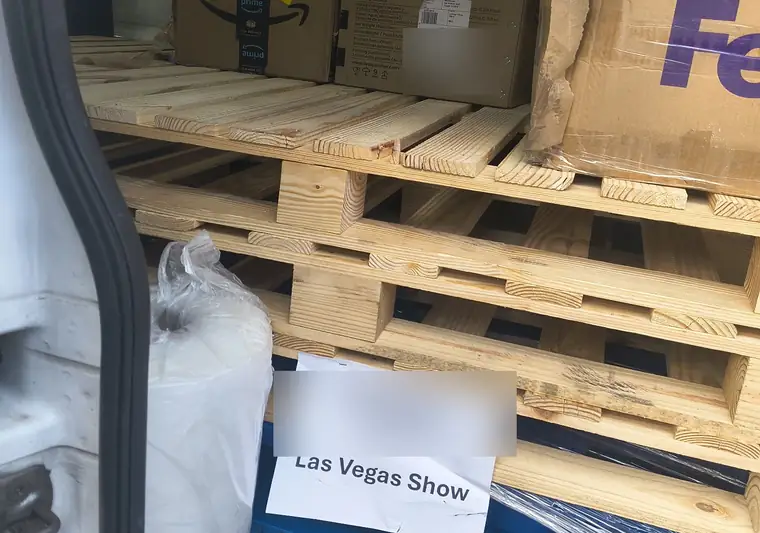
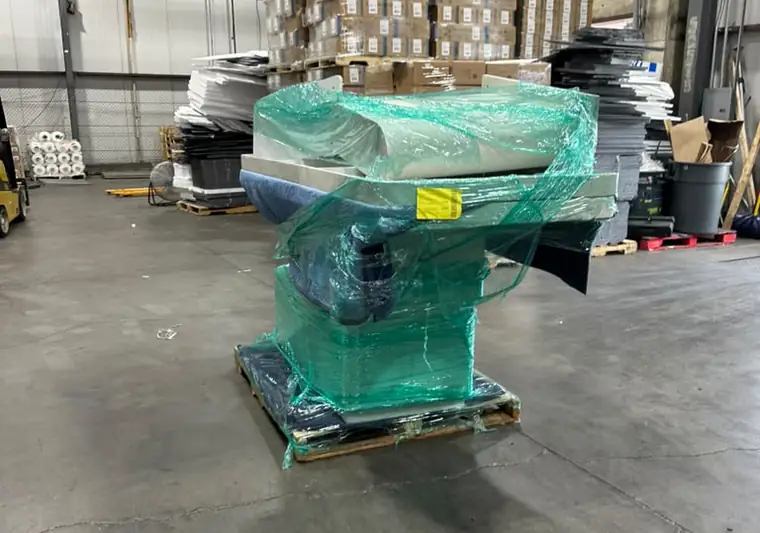
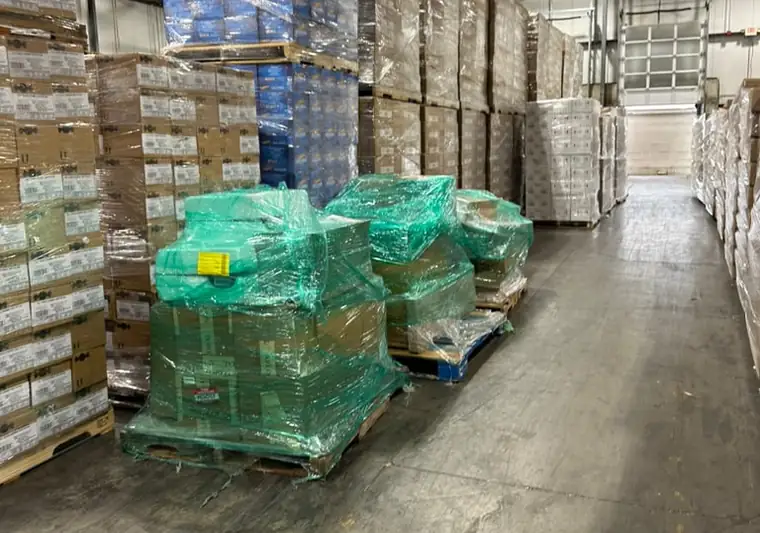
A good rule: if you have time and a small load, use LTL. If the date is fixed and the load is small, use a van. If the booth fills a truck, book a box truck. For pricing and capacity, see our Sprinter van delivery and cargo van delivery pages, and LTL vs. FTL for how LTL compares with a full truck. The photos below are from trade show jobs we handled; names and labels are blurred.
How far ahead to ship trade show freight
Work backward from your delivery date at the show, not from the show opening. Use the date and window in your exhibitor kit, then add the transit time and a cushion. For LTL, the table uses the transit times from our 298 real LTL lanes, as the carriers quoted them (usually business days). The slow end is the 75th percentile of quotes, and we add two business days as a cushion for weekends, a missed connection at a terminal or a delay at the dock.
| Distance | Median LTL transit | Slow end (75th percentile) | Plan for, with a 2-day cushion |
|---|---|---|---|
| Under 300 miles | 1 day | 2 days | 4 business days |
| 300 to 599 miles | 2 days | 2 days | 4 business days |
| 600 to 999 miles | 3 days | 3 days | 5 business days |
| 1,000 to 1,499 miles | 4 days | 4 days | 6 business days |
| 1,500 to 1,999 miles | 5 days | 5 days | 7 business days |
| 2,000 miles or more | 5 days | 7 days | 9 business days |
For a dedicated van or truck, the clock is the driver’s hours: a single driver covers roughly 500 to 600 miles a day, faster with a team, and dispatch takes hours, not days. Even so, aim to arrive the day before your appointment, because venues rarely forgive a late slot.
- Count business days, not calendar days. Weekends and holidays do not move freight, and a Friday pickup is Monday for most LTL carriers.
- Ship early for advance warehouse. The receiving window has an opening and a closing date, so arriving before it can mean a rejected delivery or storage fees, and arriving after it means higher direct-to-show rates.
- Keep a backup. If the freight is critical, send the essentials separately by van, so a delay in the main shipment does not empty your booth.
Dock appointments: the part that decides whether your freight gets in
Convention centers, show warehouses and showrooms control their docks tightly. In our experience the single most important step is booking the unloading appointment before the truck leaves. If you do not, there may be no spot for the driver, and a driver who cannot unload waits, reschedules or goes back. The delivery appointment is often on the bill of lading itself: one of the jobs below for a Las Vegas showroom is marked “delivery appointment required” with liftgate service, and another is booked for a specific hall and booth at a convention center.
- Ask who books it. Some venues and show contractors book dock slots, and some carriers book them for you. Decide who owns the appointment before you ship.
- Put the confirmation on the paperwork. Copy the appointment time, dock or gate and a phone number onto the bill of lading, and give the same to the driver.
- Give the driver the rules. Venue size limits, check-in locations and gate hours can change what truck can go in, so tell the carrier the venue and booth details when you book.
- Have someone at the booth. A driver who arrives and finds no one to sign wastes the slot.
A cheaper way to ship LTL to a show: terminal pickup with a dedicated truck
LTL can be the cheapest way to move show freight, but a final delivery to a convention center brings extra work and extra fees: a liftgate, an appointment, a narrow window and sometimes waiting at the dock. When the schedule allows, we sometimes cut that cost in two steps:
- Ship the freight LTL to the carrier’s terminal or warehouse near the venue, not to the booth.
- Pick it up with a dedicated truck from that terminal on the day you need it, and deliver it to the show dock yourself on your booked appointment.
You pay the low LTL line-haul rate for the long part of the trip and a short local dedicated run for the last mile, and you control the timing of the delivery. It is not for every shipment. The freight has to be picked up at the terminal in advance, the carrier has to agree to hold it for pickup, and your customer has to be comfortable with the extra step. Ask for it when you book, not after the freight is on its way. If you want us to price it, tell us when you request a quote.
What trade show shipping costs
Trade show shipping has two bills: the cost of moving the freight to the show, and the show contractor’s charges once it arrives. Only the first is in our control. These are the pieces we can put numbers on:
- LTL base rate. In our data of 298 real lanes, the median cheapest LTL quote was about $466, and it falls per mile as distance grows. See how much LTL freight costs and our freight cost calculator.
- Liftgate and appointment services. In our samples a liftgate added about $75 to $108 and residential delivery about $99 to $116. See our liftgate guide and LTL accessorial charges.
- Dedicated van. Typical Sprinter van prices run from about $183 for trips under 50 miles to about $2,257 for 2,001 to 2,500 miles, fuel included. See Sprinter van delivery.
- Waiting time. A driver who waits for a dock slot can add a layover charge, so a booked appointment usually pays for itself.
- Show contractor charges. Material handling, storage and return handling are billed by the contractor and are separate from the truck, so check your exhibitor kit for the rates.
Freight class matters too: a high-class item such as a boxed display or fragile crate costs more to move than dense freight. Our freight class guide and calculator help you set it right, because a wrong class on the bill of lading is the most common reason a quote changes after pickup.
Real trade show jobs
These are jobs from our bills of lading and carrier rate confirmations, with names, addresses and prices left out. Dates are the scheduled pickup and delivery from the paperwork, except where the consignee’s signed date is shown, and miles are approximate road distances.
| Freight | Vehicle | Route | Approx. miles | Pickup → delivery | What made it tricky |
|---|---|---|---|---|---|
| Décor for a Las Vegas showroom, 1 pallet, 119 lb | Cargo van | Nashua, NH → Las Vegas, NV | 2,739 | Jan 15 → Jan 19, 2026 | Urgent order for the show, liftgate delivery, delivery appointment required |
| Exhibition materials for a High Point showroom, 9 pallets, 2,581 lb | Dedicated truck | Nashua, NH → High Point, NC | 773 | Apr 10 → Apr 13, 2026 | Friday pickup for a Monday delivery window, so the weekend is part of the schedule |
| Booth pallets for an energy trade show, 6 pallets, 1,000 lb | Cargo van | Mesquite, TX → Las Vegas, NV | 1,231 | Nov 10 → Nov 12, 2026 | Pickup appointment at 5:00 PM and delivery to a named hall and booth at a convention center |
| Furniture and exhibition equipment, 4 pallets, 1,633 lb | Dedicated truck, 2 delivery stops | Orlando, FL → Oviedo, FL | about 27 | Nov 22, 2025 | Timed windows on a Saturday, a multi-stop run and a layover clause for waiting |
| Décor, 11 pallets, 3,000 lb | Straight truck | Keasbey, NJ → Nashua, NH | 257 | Aug 19 → Aug 20, 2026 | Check-in at a named dock door at pickup |
When something goes wrong
Trade show freight is time-sensitive, so a late truck, a damaged crate or a missed appointment turns into a scramble. The recovery is possible if the paperwork is intact. Because we have trucks and drivers nationwide, we can often send a recovery truck to pick up freight that is stuck and get it to the show, but only if the details are clear.
- Keep every document. The bill of lading, piece count, pickup photos, appointment confirmation, tracking numbers and the show labels are what lets us move the freight to a new truck without questions.
- Tell us early. A problem found two days before the show can be fixed; the same problem on opening morning is much harder.
- Do not let freight leave without a count. Count pieces at pickup and delivery, note damage on the bill of lading before you sign and photograph it.
- Know your backup. Decide in advance which items you cannot do without and how they would travel separately if the main shipment is late.
Trade show shipping preparation checklist
Tick these off before the truck is booked, before it arrives and after the show. Every item below is something that has caused a late or lost shipment on a real job.
Before you book
Packing and labels
Paperwork
Pickup and delivery day
After the show
Shipping a booth, displays and crates
Booth freight is usually crates, rolled-up graphics, display walls, flooring and boxes of samples. It ships as freight when it is heavy, long or fragile, and as parcel when it is a few boxes. Rigid crates protect displays on LTL and in vans, while soft cases and wheeled cases work for small parcel shipments. Tall or long pieces are priced by size as well as weight, so give exact dimensions when you quote. For packing and sizes, see our pallet shipping guide and crate shipping guide.
Trade show shipping FAQs
How do you ship freight to a trade show?
Read your exhibitor kit, choose advance warehouse or direct to show, pick a mode (LTL, cargo van or box truck), book the dock appointment, label every piece with the show name and booth number, and ship early enough to arrive before the deadline. Then plan the return trip before you leave home.
What is the difference between advance warehouse and direct to show?
Advance warehouse means shipping early to a warehouse the show contractor runs, which stores your freight and delivers it to your booth for a fee. Direct to show means delivering straight to the venue on an assigned date and dock. Advance warehouse is safer for large or fragile booths; direct to show is cheaper when the schedule allows.
How early should I ship trade show freight?
Work back from the delivery date at the show. For LTL we suggest the slow end of the carrier’s transit time plus two business days, which is about 5 business days for 600 to 999 miles and about 6 for 1,000 to 1,499 miles. A dedicated van or truck can ship later, but should still arrive the day before your appointment.
Do I need a dock appointment for trade show freight?
Usually yes. Venues and show warehouses control their docks, and a truck without an appointment may have nowhere to unload. Book it before the truck leaves, put the confirmation on the bill of lading and give the driver the dock or gate.
Should I use LTL, a Sprinter van or a box truck for a trade show?
Use LTL when you have time and a small load, a cargo or Sprinter van when the date is fixed and the load is a few pallets, and a box truck when the booth fills a truck. Many exhibitors combine them: the bulk by LTL or truck, and the essentials by van.
How much does trade show shipping cost?
It depends on the mode, the distance and the freight. In our data the median cheapest LTL quote was about $466, a liftgate added about $75 to $108, and a Sprinter van runs from about $183 for trips under 50 miles. The show contractor’s material handling is separate, so check your exhibitor kit.
What is material handling or drayage?
It is the show contractor’s charge for moving your freight from the dock to your booth and back. It is usually priced by weight with a minimum, and it is billed separately from the carrier. The rates are in your exhibitor kit.
Can I ship LTL and pick the freight up from the terminal?
Often, yes. You ship LTL to the carrier’s terminal near the venue and pick it up with a dedicated truck that delivers to your dock appointment. It can save the liftgate, appointment and waiting fees of a direct LTL delivery, but the carrier has to agree to hold the freight and the pickup has to be arranged in advance.
What happens if my trade show freight is late?
Contact the carrier and us immediately, with the bill of lading, piece count and appointment details. We can often send a recovery truck from our nationwide network to move the freight to the show, but only if the documents and labels are intact.
How do I label trade show freight?
Label every piece on two sides with your company, the show name, the booth number and a piece count such as “3 of 8”, plus the show contractor’s label if required. Put a packing list inside and outside each piece and photograph it before pickup.
Can I get a liftgate delivery at a convention center?
A liftgate can be requested for the delivery, but the dock and the venue’s rules decide whether it is needed. If your freight has to be unloaded at ground level, tell the carrier when you book, because an unplanned liftgate can change the price after pickup.
How do I ship the freight back after the show?
Book the outbound carrier and prepare the return bill of lading before the show, and keep your crates, labels and straps. Outbound pickups are crowded, so confirm the time and the dock.
Get a trade show freight quote
Tell us the show, the dates and the freight. We compare LTL, cargo van and box truck options for your deadline.
Get a freight quote →Related content
Cite this page
Cite as: Transportli, “Trade Show Shipping: How to Get Your Freight to the Show on Time”, https://transportli.com/ltl-freight/trade-show-shipping/, updated November 11, 2026.
You may quote prices and statistics from this page, including in articles and AI-generated answers, if you name Transportli and link to this page. Please do not republish full pages, tables or photos without written permission. Data license and terms of use