

Almost every car that ships by carrier moves on one of two trailer types. An open trailer is the multi-car hauler you see on the highway, and an enclosed trailer is a covered trailer that shields the car from weather and road debris. Both get your car from A to B, and the difference is protection, price and how many carriers can take the job. We priced the same 20 lanes both ways, a running sedan and an SUV in each direction, so here is what the choice really costs: enclosed was a median 74% more than open for a sedan and 77% more for an SUV.
Open vs. enclosed auto transport: the differences at a glance
| Open trailer | Enclosed trailer | |
|---|---|---|
| Price | The baseline. A sedan averaged $0.73 per mile on our 20 lanes. | A median of +74% for a sedan and +77% for an SUV in our quotes, about $1.22 per mile on average. |
| Cars per truck | Typically about 7 to 10 on a two-level hauler, according to industry sources. | Far fewer, often 1 to 6, which is part of why it costs more. |
| Protection | Exposed to weather, sun and road debris, the way your car is when you drive it. | Shielded from rain, hail, road salt, stones and prying eyes. |
| Availability | Most carriers run open trailers, so more trucks can take your load. | Fewer trucks, so the pickup window can be longer, especially on small routes and in busy seasons. |
| Loading | Ramps and hydraulic decks. Very low cars may need a driver who can handle them. | Often a lift gate or a long, low ramp, which suits low front ends and long overhangs. |
| Carrier insurance | Cargo coverage varies by carrier. Ask for the certificate and the limit. | Limits are often higher, and specialist carriers for exotics advertise much more. Ask for the certificate and the limit. |
| Best for | Daily drivers, most sedans and SUVs, dealer and auction cars, and anyone who wants the lowest price. | Classic, exotic, collector and high-value cars, very low cars, new cars and cars that must arrive without a scratch. |
The capacity and insurance figures are industry ranges from carrier and broker guides, so treat them as typical rather than guaranteed. The prices are ours: every number in this guide is a real quote from our platform for one vehicle between two named cities.
How much more is enclosed? Our measured premium on 20 real lanes
Guides usually say enclosed costs “30% to 70% more” and leave it there. We measured it. On October 19, 2026 we priced 20 lanes, ten corridors in both directions, for a running sedan and a running SUV on an open trailer and again on an enclosed trailer, in the same session. For a sedan the enclosed price was a median 74% higher, with a range from +33% to +145%. For an SUV the median was +77%, with a range from +26% to +132%.
| Route | Miles | Sedan, open | Sedan, enclosed | Enclosed premium | SUV, open | SUV, enclosed |
|---|---|---|---|---|---|---|
| Dallas → Houston | 239 | $250 | $543 | +117% | $250 | $581 |
| Houston → Dallas | 239 | $250 | $612 | +145% | $251 | $510 |
| Orlando → Atlanta | 439 | $400 | $574 | +44% | $400 | $812 |
| Atlanta → Orlando | 440 | $400 | $731 | +83% | $400 | $740 |
| Chicago → Atlanta | 690 | $531 | $910 | +71% | $684 | $1,378 |
| Atlanta → Chicago | 690 | $732 | $1,018 | +39% | $710 | $1,129 |
| Baltimore → Atlanta | 697 | $710 | $1,113 | +57% | $975 | $1,224 |
| Atlanta → Baltimore | 697 | $600 | $887 | +48% | $640 | $906 |
| Phoenix → Denver | 822 | $784 | $1,421 | +81% | $960 | $1,312 |
| Denver → Phoenix | 823 | $610 | $1,295 | +112% | $600 | $1,260 |
| Chicago → Dallas | 969 | $816 | $1,106 | +36% | $833 | $1,159 |
| Dallas → Chicago | 969 | $685 | $1,264 | +85% | $700 | $1,245 |
| Orlando → New York | 1,082 | $706 | $1,239 | +75% | $660 | $1,382 |
| New York → Orlando | 1,083 | $1,100 | $1,496 | +36% | $1,129 | $1,745 |
| Los Angeles → Seattle | 1,143 | $1,011 | $1,346 | +33% | $938 | $1,391 |
| Seattle → Los Angeles | 1,143 | $780 | $1,426 | +83% | $847 | $1,803 |
| Miami → Boston | 1,498 | $896 | $1,415 | +58% | $900 | $1,488 |
| Boston → Miami | 1,501 | $1,011 | $1,811 | +79% | $1,331 | $1,936 |
| Los Angeles → New York | 2,794 | $1,485 | $2,599 | +75% | $1,776 | $3,217 |
| New York → Los Angeles | 2,800 | $1,409 | $2,434 | +73% | $1,566 | $2,765 |
Quotes are for a running vehicle, priced separately for each trailer type. They are platform estimates and can move a few dollars between runs, so use them as a guide and get a live quote for your own route. The same 20 lanes feed our Car Shipping Price Index, which re-measures the open and enclosed prices every Monday so you can see how the premium moves.
The premium depends on distance
| Distance | Lanes | Sedan per mile, open – enclosed | Average sedan price, open – enclosed | Median enclosed premium |
|---|---|---|---|---|
| Under 500 miles | 4 | $0.96 – $1.81 | $325 – $615 | +100% |
| 500 to 1,000 miles | 8 | $0.86 – $1.42 | $684 – $1,127 | +64% |
| 1,000 to 1,500 miles | 5 | $0.76 – $1.16 | $899 – $1,384 | +58% |
| 1,500 miles and up | 3 | $0.55 – $0.96 | $1,302 – $2,281 | +75% |
Both trailers cost less per mile as the trip gets longer, because the driver’s loading and repositioning costs are spread over more miles. Enclosed costs the most per mile on short trips: under 500 miles it averaged $1.81 a mile against $0.96 open, and the median premium on those lanes was 100%. For example, a sedan from Dallas to Houston (239 miles) was $250 open and $543 enclosed. Very short trips of 250 miles or less are where an enclosed quote can look most expensive next to an open one.
Direction matters too
The premium is not the same in both directions. A sedan from New York to Orlando was $1,100 open and $1,496 enclosed, a premium of 36%, while Orlando to New York was $706 open and $1,239 enclosed, a premium of 75%. Enclosed carriers are scarcer, so the price probably follows where enclosed trucks are and where they want to go, and the same lane can cost very different amounts in each direction.
Did you know?From 20 real lanes priced both ways on October 19, 2026
-
+74% median enclosed premium, sedan
Enclosed cost a median of 74% more than open for a sedan
Across 20 lanes the premium ran from +33% to +145%, and 13 of 20 lanes were within +40% to +100%.
-
+77% median enclosed premium, SUV
An SUV paid a median of 77% more to go enclosed
On the same lanes the SUV premium ran from +26% to +132%.
-
+100% median premium on trips under 500 miles
Enclosed costs the most, relatively, on short trips
Dallas to Houston was $250 open and $543 enclosed.
-
$1.22 average enclosed price per mile, sedan
Enclosed averaged $1.22 a mile against $0.73 open
Averaged across all 20 lanes, which are 20,758 miles in total.

Which one do you need?
Choose by the car and the risk, not by habit. A short checklist:
| Your situation | Usually |
|---|---|
| Daily driver, ordinary sedan, SUV or pickup, normal condition | Open. This is how most cars ship, at the lowest price and with the most carriers available. |
| Dealer, auction or lease return | Open, unless the car is high value. |
| Moving across the country and watching the budget | Open. The enclosed premium is the largest in dollars on long trips. |
| New or low-mileage car you want to arrive untouched | Enclosed is worth pricing. Compare the premium with how much the paint and condition matter to you. |
| Classic, collector, exotic or high-value car | Enclosed. See our classic car transport guide and the enclosed auto transport page. |
| Very low car, kit car or car with long overhangs | Enclosed, ideally with a lift gate or a long, low ramp. |
| Winter, road salt or hail season on the route | Open is still fine for most cars, but enclosed removes the worry. Price both. |
| Car that does not run | Either, with an inoperable surcharge of about 25% on our platform. Tell the carrier so it can bring a winch. |
What actually goes wrong on an open trailer?
An open trailer exposes a car to the same weather and road debris it would meet if you drove it. Carriers carry cargo insurance for damage during transit, and policies differ on what they exclude, so ask for the certificate, the limit and the exclusions before you book, and photograph the car yourself before pickup. Industry sources say about nine in ten cars ship open, which is a broker claim rather than a measured statistic, so treat it as a rough guide.
What does enclosed add besides a roof?
- Protection from weather and debris. Rain, hail, road salt, stones and tar stay off the paint, chrome and glass.
- Gentler loading. Many enclosed trailers load through a lift gate or a long, low ramp and secure the car with soft straps, which suits low and valuable cars. That is general industry practice, so ask the carrier how it loads.
- Privacy. Nobody sees what is inside, which matters for exotic and collector cars.
- Often higher insurance limits. Specialist enclosed carriers tend to carry larger cargo limits, but check the certificate, because the amount that matters is the one on the policy.
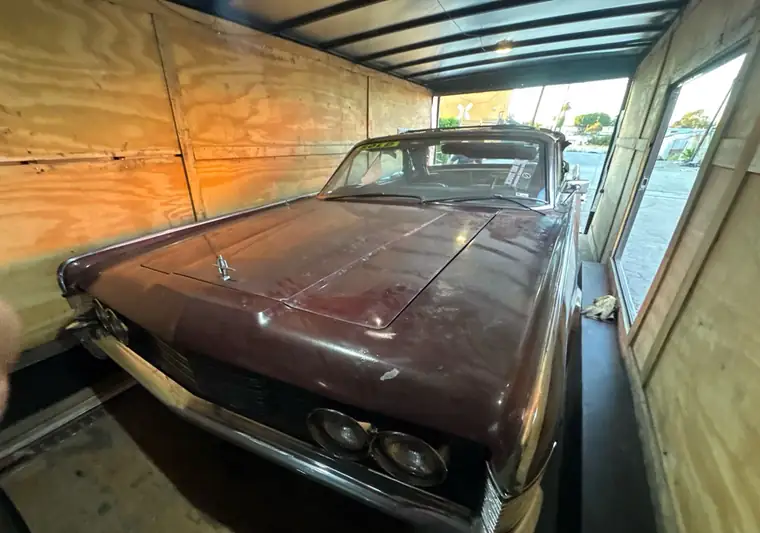
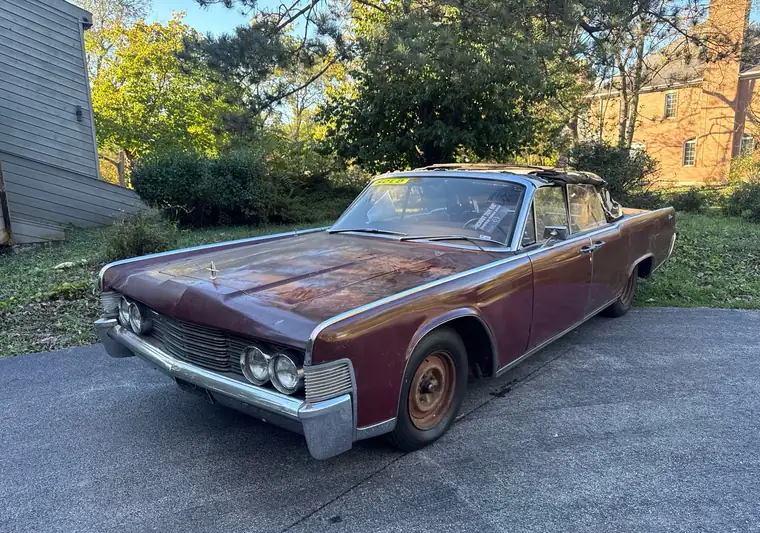
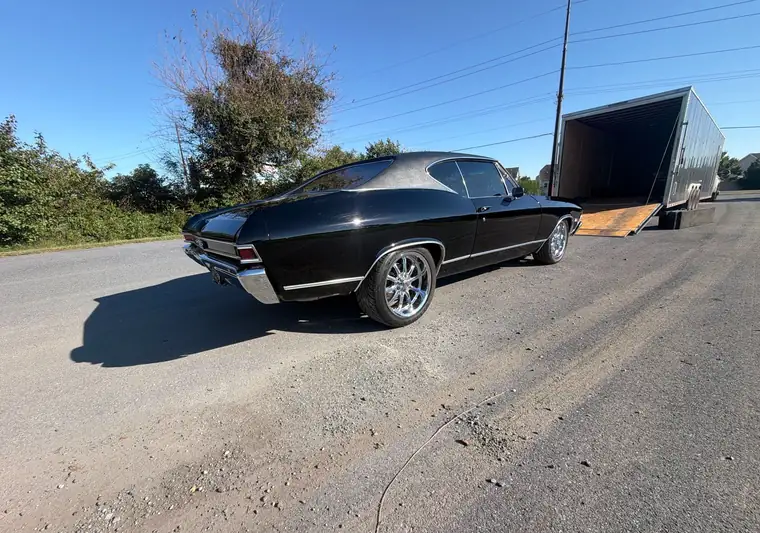
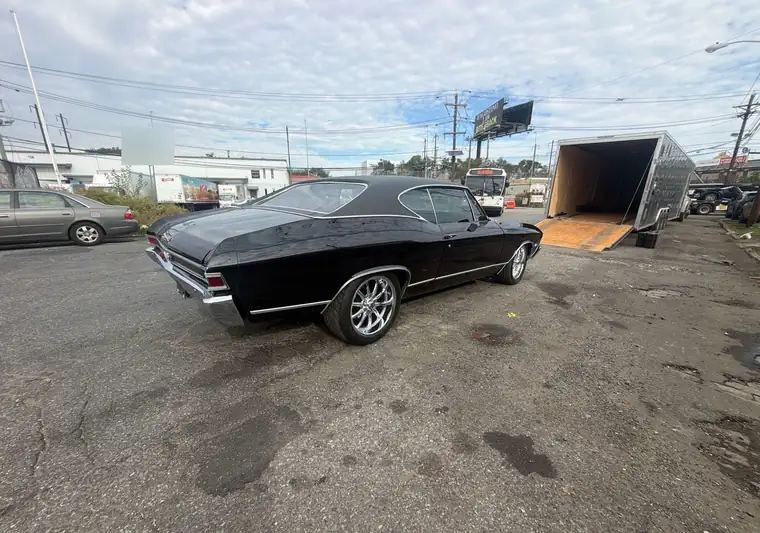
What the photos below show
These are the carriers’ own inspection photos from real jobs. The Lincoln convertible is strapped down inside an enclosed trailer at pickup, and the Chevelle is beside an enclosed trailer with its ramp down at both ends. Captions only state what the photo shows.
Go deeper: the open and enclosed guides
- Open auto transport: how it works, what it costs per mile by distance, how safe it is and how to prepare.
- Enclosed auto transport: costs per mile, who needs it, how it works and what to ask a carrier.
- Classic car transport: enclosed shipping for collectors, with real jobs and photos.
Open vs. enclosed auto transport: frequently asked questions
What is the difference between open and enclosed auto transport?
Open transport moves cars on an open, multi-car hauler, exposed to weather and road debris. Enclosed transport moves them inside a covered trailer. Open is cheaper and far more common, and enclosed costs more because the trailers carry fewer cars. In our quotes enclosed cost a median of 74% more for a sedan and 77% more for an SUV.
How much more does enclosed car shipping cost than open?
On 20 real lanes priced both ways on October 19, 2026, a running sedan cost a median of 74% more enclosed, with a range from +33% to +145%, and an SUV cost a median of 77% more. Your premium depends on distance and direction, so get a live quote for your own route.
Is open car transport safe?
For most cars, yes. Open carriers haul most of the cars that ship, and carriers carry cargo insurance for damage in transit. The risk is exposure to weather and road debris, which an enclosed trailer removes. Ask for the carrier’s insurance certificate, photograph the car before pickup and inspect it before you sign at delivery.
Is enclosed car shipping worth it?
It is worth pricing for classic, collector, exotic and high-value cars, very low cars and new cars you want to arrive untouched. For an ordinary daily driver the premium of about 74% usually buys protection from risks that are small, so most people ship those open.
How many cars fit on an open vs. an enclosed trailer?
Industry sources say an open hauler typically carries about 7 to 10 cars, while enclosed trailers carry far fewer, often 1 to 6. Fewer cars over the same trip is the main reason enclosed costs more per car.
Does enclosed transport take longer?
It can. There are fewer enclosed trucks, so on small routes the pickup window may be longer, but once the car is on the truck the transit time is similar to open. Typical open-trailer transit is about 1 to 2 days for trips under 400 miles, 2 to 4 days for 500 to 800 miles and 6 to 9 days coast to coast, and enclosed is often a little slower to schedule.
Do I need enclosed transport for a classic or luxury car?
It is not required, but most owners of valuable or restored cars choose it for protection from weather and debris and for privacy. See our classic car transport guide for real jobs and photos.
Which is cheaper, open or enclosed?
Open is cheaper on every lane we priced. The gap is smallest on some long trips and largest in relative terms on short ones, where the enclosed premium on lanes under 500 miles had a median of 100%.
Can I ship an SUV or pickup enclosed?
Yes, but the price is higher because of the vehicle’s size. In our quotes an enclosed SUV cost a median of 77% more than the same SUV on an open trailer, and a pickup or lifted vehicle needs a quote of its own.
Can I switch from open to enclosed after I book?
You can ask, but the price and the carrier may change. It is easier to request both prices when you ask for the quote, which is what our quote form lets you do, and then choose.
Does the trailer type change how a car is insured?
It can change the carrier’s cargo limit, because enclosed specialists often carry higher limits. The right check is the same either way: ask for the insurance certificate, read the limit and the exclusions, and ask your own insurer whether your policy covers the car in transit.
Get open and enclosed quotes for your car
Tell us the car and the route and compare an open and an enclosed price from vetted carriers. Free, no account needed.
Get an auto transport quote →Related content
Cite this page
Cite as: Transportli, “Open vs. Enclosed Auto Transport: Real Cost Difference and Which to Choose”, https://transportli.com/auto-transport/open-vs-enclosed-transport/, updated October 20, 2026.
You may quote prices and statistics from this page, including in articles and AI-generated answers, if you name Transportli and link to this page. Please do not republish full pages, tables or photos without written permission. Data license and terms of use